This post is part of a series. You can start with Cruzin’, then Cruzin’:Day Two, Mexican Adventures and Cruzin’ Day IV:Poison & Magic.
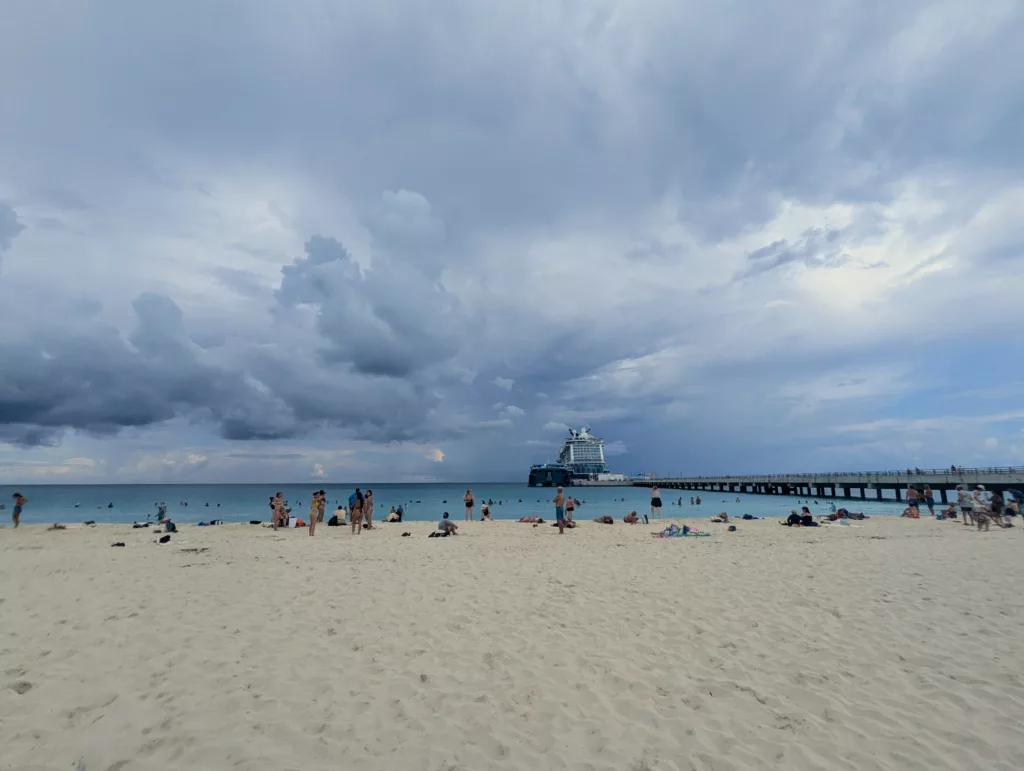
See that? That’s the beach at Bimini, part of the Bahamas. See that ship, that’s our ship. See those clouds? Full of rain. Looks like that hurricane is getting closer.
Continue reading “Last Day Cruzin’”